
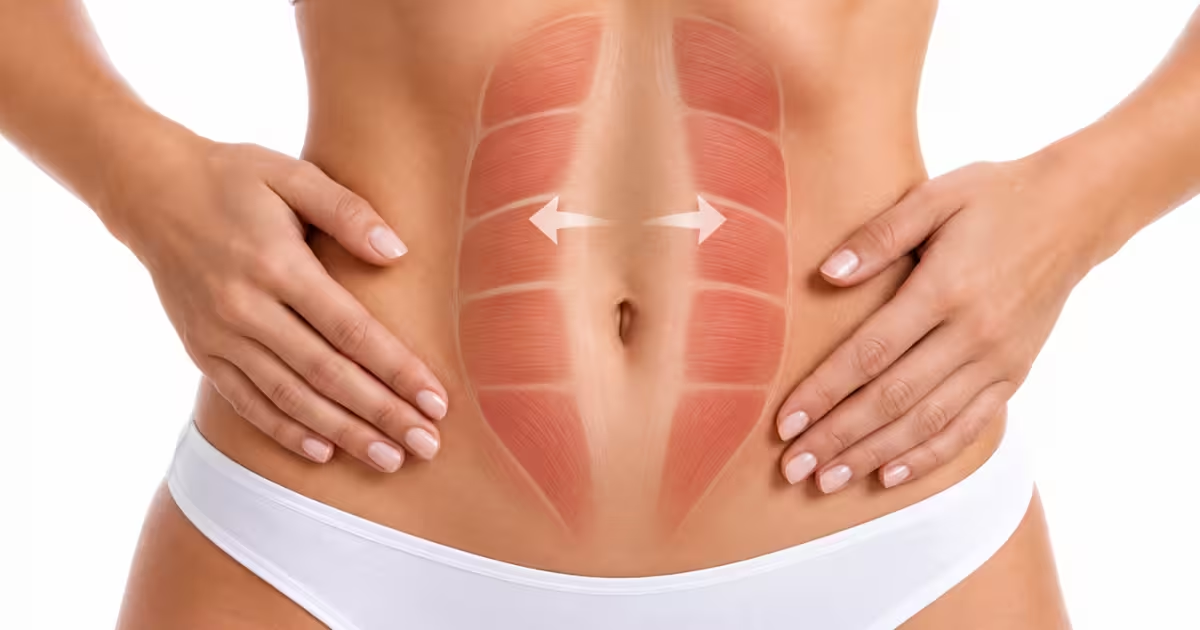
Abdominal diastasis can change the way a person perceives their own body. In some women, especially after pregnancy, the abdomen may remain protruded even after losing weight.
It is also common to feel that the abdomen does not respond as it used to. Clothes may fit differently, and activities that once seemed simple may cause discomfort or insecurity.
However, abdominal diastasis is not only an aesthetic concern.
The condition involves separation of the rectus abdominis muscles and may be associated with changes in the abdominal wall. Therefore, an appropriate evaluation is important to understand its extent, characteristics, and which treatment options may be appropriate.
In certain cases, plastic surgery may be part of the treatment, especially when there is excess skin and abdominal wall changes that cannot be corrected through conservative measures alone.
What Is Abdominal Diastasis?
Abdominal diastasis occurs when the rectus abdominis muscles separate along the midline, increasing the distance between them.
This separation is related to changes in the linea alba, a connective tissue structure located between the muscles.
The condition is well known during the period after pregnancy because the growth of the uterus causes changes and stretching of the abdominal wall.
However, diastasis can also be associated with other factors.
These include:
- Pregnancy.
- Significant weight changes.
- Aging.
- Abdominal distension.
- Individual tissue characteristics.
- Increased intra-abdominal pressure.
Therefore, not every change in the shape of the abdomen necessarily means abdominal diastasis.
A medical evaluation is important to differentiate between possible causes.

How Can I Know If I Have Abdominal Diastasis?
The appearance of the abdomen may raise suspicion, but it is not enough to establish a diagnosis.
Some people notice a bulge or protrusion along the middle of the abdomen, particularly when performing certain movements.
They may also notice changes in abdominal contour after pregnancy or significant weight loss.
Signs that may lead to further investigation include:
- Bulging along the midline of the abdomen.
- A sensation of separation or weakness in the abdominal muscles.
- Changes in abdominal contour.
- Difficulty restoring the previous appearance of the abdomen.
- Discomfort related to the abdominal wall in some cases.
These signs do not necessarily mean that surgery is needed.
Diagnosis should consider the medical history and physical examination. In some situations, imaging tests may also be used to complement the evaluation.
Does Every Case of Abdominal Diastasis Require Surgery?
No.
This is one of the most important pieces of information for anyone researching abdominal diastasis treatment.
The need for surgery depends on several factors. The extent of muscle separation is only one of them.
In certain cases, conservative measures and follow-up with specialized professionals may be part of the treatment approach.
Depending on the situation, treatment may involve:
- Individualized medical evaluation.
- Physical therapy.
- Appropriate abdominal muscle strengthening.
- Exercise guidance.
- Management of associated factors.
- Monitoring the progression of the condition.
Therefore, identifying abdominal diastasis does not automatically mean that abdominal surgery is necessary.
Treatment needs to consider the patient’s overall condition.
When Can Surgery Be Part of Abdominal Diastasis Treatment?
Surgery may be considered when the evaluation identifies abdominal wall changes that can be addressed surgically.
This may occur, for example, in patients who have diastasis associated with excess skin and significant changes in abdominal contour.
In these situations, surgery may be part of a treatment plan aimed at correcting laxity and improving the structure of the abdominal wall.
However, the indication should not be based solely on the appearance of the abdomen.
During the consultation, the surgeon needs to evaluate:
- Degree and location of the diastasis.
- Condition of the abdominal muscles.
- Amount of excess skin.
- Degree of laxity.
- Tissue quality.
- Pregnancy history.
- Weight changes.
- Presence of hernias or other conditions.
- Expectations regarding surgery.
- Clinical conditions for undergoing the procedure.
This analysis helps determine whether there is a surgical indication and which strategy may be appropriate.
Does Abdominoplasty Correct Abdominal Diastasis?
In certain patients, yes.
Abdominoplasty is a plastic surgery procedure that may involve correction of the abdominal wall, in addition to removal of excess skin and treatment of laxity.
When abdominal diastasis has an indication for surgical correction, the procedure may include bringing the rectus abdominis muscles closer together, according to the evaluation and surgical plan developed by the surgeon.
This does not mean that every abdominoplasty is the same.
The technique used and the extent of the procedure depend on the patient’s anatomical characteristics.
For this reason, surgery needs to be individually planned.
Is There a Relationship Between Abdominal Diastasis and a Protruding Abdomen?
There can be.
Changes in the abdominal wall may contribute to a change in abdominal contour. In some people, this can result in a more projected or protruding appearance.
However, a protruding abdomen can have different causes.
Localized fat, excess skin, laxity, posture, abdominal distension, and other conditions can also influence the shape of the abdomen.
Therefore, it is not appropriate to conclude that someone has abdominal diastasis simply by observing the shape of their abdomen.
A professional evaluation helps identify which factors are actually involved.
Can Exercise Correct Abdominal Diastasis?
Exercise can be part of the treatment of certain cases, but the approach needs to be individualized.
The abdominal muscles play an important role in the stability and function of the trunk. Therefore, appropriately guided exercises may be considered as part of a conservative treatment strategy.
However, it is important to avoid the idea that there is one universal exercise capable of correcting every case of abdominal diastasis.
The condition can present different degrees and characteristics.
In addition, exercises performed incorrectly may increase intra-abdominal pressure and cause bulging in some people.
Therefore, anyone who suspects abdominal diastasis should seek professional guidance before starting a specific exercise routine to try to correct the condition.
When Does Abdominal Diastasis Develop After Pregnancy?
Pregnancy is one of the situations most commonly associated with abdominal diastasis.
During pregnancy, the body undergoes significant changes to accommodate the growing baby. The abdominal wall stretches, and separation of the rectus abdominis muscles may occur.
After childbirth, some women notice that their abdomen does not completely return to its previous shape.
This can happen even after losing the weight gained during pregnancy.
This is when many women begin looking for information about diastasis, exercises, and surgery.
Evaluation is important because treatment should consider the time since childbirth, the characteristics of the abdominal wall, and the patient’s goals.
Does Diastasis Surgery Also Remove Abdominal Fat?
Not necessarily.
Correcting diastasis and removing fat are different issues.
Surgery may be planned to address changes in the abdominal wall and excess skin. In certain cases, complementary procedures may be considered when localized fat is also present.
However, one does not replace the other.
Liposuction, for example, addresses localized fat deposits. Its primary purpose is not to correct separation of the rectus abdominis muscles.
Therefore, when a patient has diastasis, laxity, excess skin, and localized fat, all these characteristics need to be evaluated before defining the surgical plan.
Can Abdominal Diastasis Return After Surgery?
The outcome of surgery depends on several factors, including surgical technique, tissue characteristics, recovery, and lifestyle habits over time.
Significant weight changes and a new pregnancy, for example, may alter the abdominal wall again.
Therefore, surgery should not be viewed as a guarantee that the abdomen will remain exactly the same forever.
Medical follow-up and habits that support the maintenance of the results are part of the process.
Each patient also receives specific recommendations according to the procedure performed and their recovery.
How Is the Evaluation Performed Before Surgery?
The consultation is an essential step in determining whether surgery can actually be part of the treatment.
The plastic surgeon evaluates the abdomen as a whole. The assessment is not limited to the distance between the muscles.
It is necessary to examine the skin, musculature, body contour, and possible associated changes.
This is also the time to discuss the patient’s expectations.
During the evaluation, the following may be discussed:
- Diagnosis and extent of the diastasis.
- Presence of excess skin.
- Degree of laxity.
- Surgical possibilities.
- Scarring.
- Recovery.
- Risks and possible complications.
- Limitations of the procedure.
- Need for additional tests.
- Expectations regarding the result.
This conversation helps transform an aesthetic or functional concern into an individualized treatment plan.
Follow our Instagram profile.
Abdominal Diastasis in São Paulo: When Should You See a Plastic Surgeon?
If you have noticed persistent changes in your abdomen after pregnancy, weight loss, or other physical changes, a consultation can help clarify what is happening.
In São Paulo, an evaluation with a plastic surgeon can help determine whether abdominal diastasis, excess skin, laxity, or other abdominal wall changes are present.
The most important thing is not to choose a treatment based solely on photographs, other people’s experiences, or information found on social media.
Your abdomen has its own characteristics.
Therefore, the indication for surgery also needs to be individualized.
Surgery Should Be a Decision Based on Evaluation, Not Just Appearance
Abdominal diastasis can affect the way a person feels about their own body. After pregnancy or a significant physical transformation, it is natural to want to restore part of the abdominal contour.
But every story is different.
Some people may benefit from a conservative approach. Others may have changes that make surgery a possible part of their treatment.
The central point is to understand that there is no single solution for every case of abdominal diastasis.
The decision should consider anatomy, symptoms, associated changes, expectations, and each patient’s individual conditions.
Do You Notice Persistent Changes in Your Abdomen and Want to Know If It Could Be Diastasis?
Schedule a consultation with Dr. José Salim Cury (CRM-SP 150220, RQE: 82241) for an individualized evaluation.
The consultation is the opportunity to understand the characteristics of your abdominal wall, clarify your questions, and discover which treatment options may be appropriate for your case.
Do not try to choose a surgery based only on what you see in the mirror. First, understand what is happening with your body.
Schedule your consultation and talk to a plastic surgeon about the most appropriate path for you.