
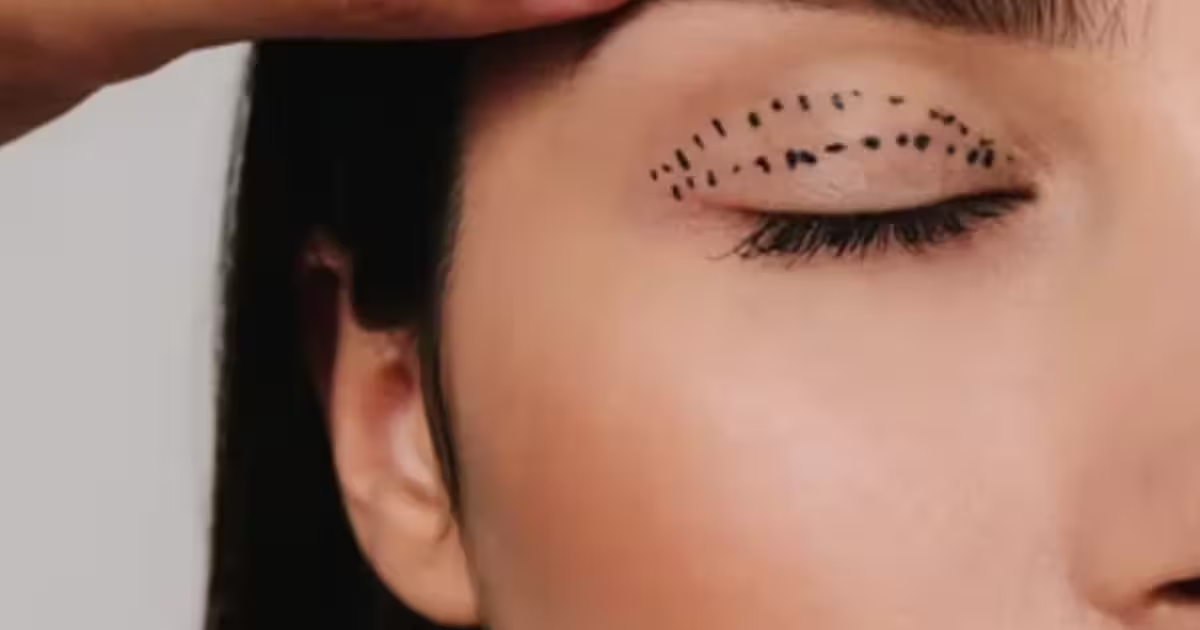
Under-eye bags are among the most common signs of facial aging that concern both men and women. They often create the appearance of constant fatigue, sadness, or premature aging, even when a person is well-rested and healthy.
Many people invest in eye creams, lymphatic drainage, and aesthetic treatments in an attempt to reduce this concern. However, when under-eye bags are caused by fat protrusion and tissue laxity, these approaches usually provide only limited improvement.
In these cases, procedures such as blepharoplasty and, in selected situations, a facelift offer the most effective solutions for restoring a refreshed, youthful, and natural-looking appearance.
What Are Under-Eye Bags?
The bags that develop beneath the eyes are primarily caused by the forward displacement of the fat that naturally cushions and protects the eyes within the eye socket.
As we age, the structures responsible for holding this fat in place gradually weaken.
This process may lead to:
- Protrusion of under-eye fat pads
- Skin laxity
- Puffiness beneath the eyes
- Loss of definition between the lower eyelid and the cheek
- A constantly tired appearance
These changes are part of the natural aging process, although they may appear earlier due to genetics and other contributing factors.
Why Do Under-Eye Bags Develop?
Several factors contribute to the development of under-eye bags.
The most common include:
- Natural aging
- Genetic predisposition
- Loss of skin elasticity
- Reduced support of facial tissues
- Lifetime sun exposure
- Smoking
- Weight fluctuations
Although lack of sleep can temporarily increase puffiness, it is not the cause of permanent under-eye bags.
When fat has shifted from its normal position, surgery is the only treatment capable of permanently correcting the condition.
Can Creams and Non-Surgical Treatments Eliminate Under-Eye Bags?
This is one of the most common questions patients ask.
Some treatments can improve skin quality and temporarily reduce swelling.
These include:
- Specialized skincare products
- Collagen-stimulating technologies
- Lymphatic drainage
- Minimally invasive aesthetic procedures
However, when excess fat and significant skin laxity are present, these treatments cannot eliminate the bags.
In these situations, surgery remains the treatment that offers the most predictable and long-lasting results.
When Is Blepharoplasty Recommended?
Blepharoplasty is considered the primary surgical procedure for treating fat bags around the eyelids.
It may be recommended for patients who have:
- Under-eye fat bags
- Excess eyelid skin
- Skin laxity around the eyes
- A tired-looking appearance
- Aging limited to the eye area
During surgery, excess fat may be removed or repositioned to preserve natural contours while improving the transition between the lower eyelids and the cheeks.
The goal is not to change facial expression, but to restore freshness and brightness to the eyes.
When Might a Facelift Also Be Necessary?
For some patients, the problem extends beyond the eyelids.
Facial aging may also involve:
- Sagging cheeks
- Loss of jawline definition
- Neck laxity
- Deep facial folds
- Descent of the facial tissues
In these situations, treating only the under-eye bags may not provide a complete rejuvenation.
A facelift repositions the deeper facial tissues, restores support to the midface, and improves the overall facial contour.
When combined with blepharoplasty, the result is often more balanced, harmonious, and comprehensive.
Blepharoplasty or Facelift: Which Procedure Is Right for You?
The answer depends on the underlying cause of the problem.
Blepharoplasty is generally recommended when there is:
- Excess eyelid skin
- Localized under-eye bags
- Aging limited to the eye area
A facelift may be recommended when patients also present:
- Significant facial laxity
- Sagging cheeks
- A double chin
- Loss of jawline definition
- Aging of the middle and lower thirds of the face
A comprehensive medical evaluation is essential to determine the most appropriate treatment.
Will the Scars Be Visible?
One of the greatest concerns among patients is scarring.
During blepharoplasty, incisions are carefully placed:
- Within the natural upper eyelid crease
- Just beneath the lower eyelashes
- Or inside the lower eyelid (transconjunctival approach) in selected cases
For a facelift, incisions are strategically hidden:
- Around the ears
- Within the hairline
- In discreet facial areas
With proper surgical technique and good healing, these scars typically become barely noticeable over time.
Will the Results Look Natural?
This is one of the biggest concerns patients have.
Modern facial plastic surgery is not intended to create a different face.
Its goals are to:
- Preserve facial identity
- Soften signs of aging
- Restore natural facial contours
- Achieve rejuvenation without an overdone appearance
Patients continue to look like themselves, only more rested, refreshed, and revitalized.
This philosophy is central to Dr. José Salim Cury’s approach to facial rejuvenation.
What Is Recovery Like?
Recovery varies depending on the procedure performed.
In general, patients may experience during the first few days:
- Swelling
- Mild bruising
- Sensitivity in the treated area
As healing progresses, these symptoms gradually improve.
Careful postoperative follow-up is essential to ensure a safe recovery and outstanding results.
The Importance of a Specialized Evaluation
Every face ages differently.
Before recommending any procedure, it is important to carefully evaluate:
- Facial structure
- Degree of skin laxity
- Skin quality
- Presence of under-eye fat bags
- Patient expectations
Dr. José Salim Cury performs a detailed assessment of every patient to determine the most appropriate technique while prioritizing safety, natural-looking results, and preservation of facial identity.
The goal is not simply to remove under-eye bags, but to achieve elegant and proportionate facial rejuvenation.

More Than Aesthetics: Restoring Confidence in Your Appearance
The eyes are one of the most expressive features of the face.
When they convey fatigue or aging that does not reflect how someone truly feels, self-confidence may be affected.
After surgical correction of under-eye bags, many patients report:
- A more rested appearance
- A lighter facial expression
- Greater confidence when smiling or taking photographs
- Improved self-esteem
- A naturally rejuvenated look
The procedure does not change who you are.
It simply allows your appearance to better reflect your vitality.
Under-eye bags are one of the leading causes of a tired and aged appearance.
Depending on each patient’s anatomy, blepharoplasty alone or combined with a facelift can provide comprehensive facial rejuvenation while preserving natural facial characteristics and individual identity.
With individualized planning and advanced surgical techniques, it is possible to achieve elegant, natural, and long-lasting results.
Schedule Your Consultation
If you would like to eliminate under-eye bags and find out whether blepharoplasty, a facelift, or a combination of both procedures is the best solution for you, schedule a consultation with Dr. José Salim Cury in São Paulo.
During your evaluation, a personalized treatment plan will be developed to achieve safe, natural-looking facial rejuvenation that respects your unique facial features and preserves your identity while delivering outstanding results.