
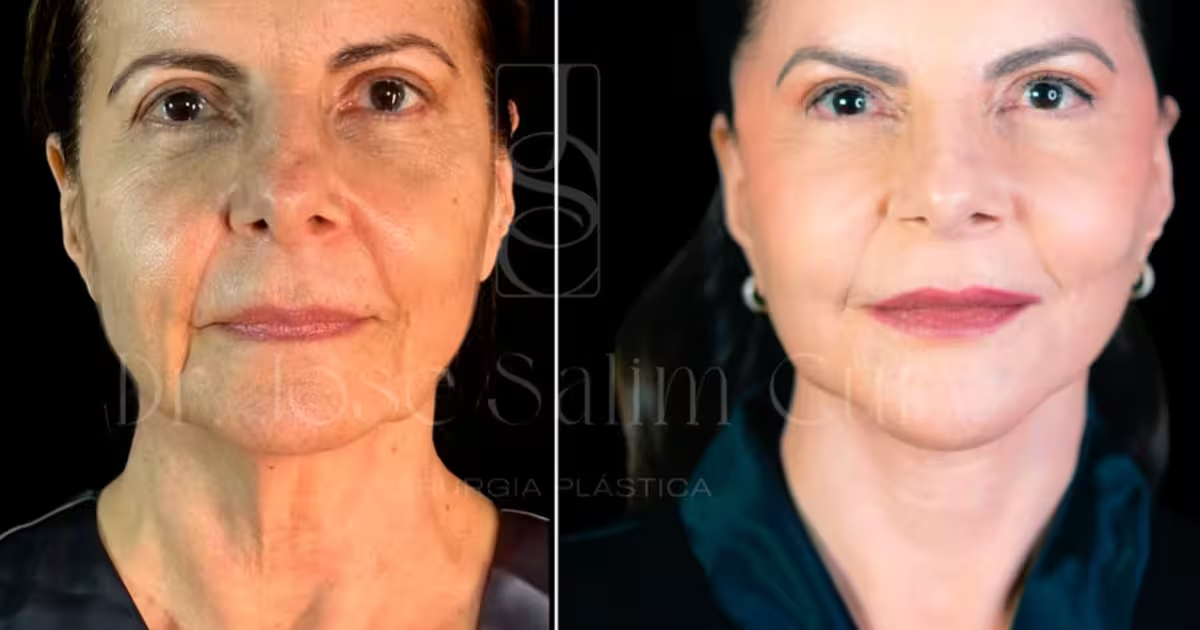
The eyes are one of the most expressive areas of the facefa. They convey emotions, personality, and even a sense of energy and vitality. For this reason, when the eyelids begin to develop excess skin or fat pockets, it is common for a person to feel that they look more tired or older than they actually feel.
Blepharoplasty is the surgical procedure designed to address changes affecting the eyelids. However, when there is a broader process of facial aging, treating the eyes alone may not be enough to achieve true facial harmony.
In Dr. José Salim Cury’s approach, blepharoplasty is considered together with a facelift when there is an indication for surgical facial rejuvenation. The proposal is to evaluate the face as a whole, incorporating the eyelids into a broader rejuvenation plan.
This strategy helps prevent the eyes from appearing rejuvenated while other areas of the face continue to show significant laxity.
What Is Blepharoplasty?
Blepharoplasty is eyelid surgery that can address age-related changes around the eyes, including excess skin, fat pockets, and certain changes in eyelid contour.
The procedure may involve the upper eyelids, lower eyelids, or both.
When performed as part of a facial rejuvenation plan that includes a facelift, the goal is to integrate rejuvenation of the eyes with the rest of the face.
The changes that may be evaluated include:
- Excess eyelid skin
- Fat pockets beneath the eyes
- Eyelid laxity
- A tired-looking appearance
- Changes in eyelid contour
The indication depends on each patient’s anatomy and the underlying cause of the changes observed.

Why Combine Blepharoplasty and a Facelift?
Facial aging does not occur in isolation.
Over time, different structures may change, including the skin, fat, and deeper tissues. A facelift primarily addresses signs of aging in the face and neck, while blepharoplasty specifically treats the eyelid region.
When these changes occur simultaneously, combining the procedures may provide a more integrated approach.
The surgical plan may address:
- Facial laxity
- Descent of the cheeks
- Loss of jawline definition
- Changes in the neck
- Excess eyelid skin
- Fat pockets around the eyes
In this way, facial rejuvenation is planned as a whole rather than as a series of isolated procedures.
Why Is the Facelift Important in This Plan?
A facelift addresses areas of the face affected by laxity and loss of contour.
Depending on the technique used, it may reposition facial structures and improve the definition of the middle and lower face and neck.
This is important because the appearance of the eyes is also influenced by the structures surrounding them.
When there is significant laxity in the cheeks, jawline, or neck, performing blepharoplasty alone may not address the entire aging process that concerns the patient.
Therefore, the evaluation needs to consider the face as a complete unit.
When Can Blepharoplasty Be Indicated Along With a Facelift?
The combination may be considered when a patient has signs of aging in the eyelids while also presenting an indication for a facelift.
Among the situations evaluated are:
- Excess eyelid skin
- Lower eyelid fat pockets
- Facial laxity
- Descent of the cheeks
- Loss of jawline definition
- Age-related changes in the neck
In these situations, combined treatment may create a more harmonious transition between the eyes, cheeks, and the rest of the face.
The decision, however, always depends on an individualized medical evaluation.
Why Not Treat the Eyelids Alone?
This is an important question for understanding the philosophy behind facial rejuvenation.
When aging affects multiple areas, the eyes represent only one part of the process. The face may simultaneously present changes in deeper tissues, laxity, loss of definition, and alterations in overall contour.
Treating the eyelids alone may not address:
- Cheek laxity
- Jowls or descent along the jawline
- Neck laxity
- Changes in facial contour
- Displacement of facial tissues
Therefore, when there is an indication for a facelift, blepharoplasty may become part of an integrated facial rejuvenation plan.
What About Fat Pockets Under the Eyes?
Lower eyelid fat pockets are one of the most common concerns associated with an aging appearance around the eyes.
They can create a tired appearance even when a person is well rested.
Lower blepharoplasty can address excess or protruding fat and, depending on the individual case, may incorporate strategies for repositioning tissues.
During the evaluation, it is important to determine whether the concern is actually related to eyelid fat or whether other changes are contributing to the appearance.
An accurate diagnosis is essential to avoid unnecessary interventions.
Can Blepharoplasty Change the Expression of the Face?
This is one of the main concerns among people considering eyelid surgery.
The goal of modern facial rejuvenation is not to change the patient’s identity.
The evaluation should carefully consider:
- Eye shape
- Eyebrow position
- Skin quality
- Fat distribution
- Eyelid structure
- The relationship between the eyes and the rest of the face
The American Society of Plastic Surgeons emphasizes that eyelid surgery planning should consider individual anatomy, the cause of the concern, and the patient’s realistic goals.
For this reason, preserving identity is an essential part of surgical planning.
What Changes When Blepharoplasty Is Combined With a Facelift?
The main difference is the global view of the face.
Instead of examining only the eyelids, the planning considers how different facial areas relate to one another.
This allows the surgeon to evaluate:
- Eyes and eyebrows
- Eyelids and cheeks
- Middle and lower face
- Jawline
- Neck
This integrated perspective helps prevent disproportionate results.
The goal is for rejuvenation of the eyes to remain harmonious with the rest of the face.
Does Combining the Procedures Mean a More Extensive Surgery?
Combining procedures increases the complexity of surgical planning.
For this reason, it should not be recommended simply for convenience.
Before surgery, factors related to the patient’s health and safety are evaluated, including:
- Clinical conditions
- Preoperative tests
- Current medications
- Medical history
- Extent of the procedures
- Expected surgical time
- Recovery conditions
The decision must always be individualized.
More procedures do not automatically mean a better result.
How Is the Patient Evaluated Before Surgery?
The first consultation is essential for understanding each patient’s individual pattern of facial aging.
Dr. José Salim Cury evaluates the face as a whole, looking not only at the areas that bother the patient most, but also at the relationship between them.
The assessment may include:
- Degree of facial laxity
- Eyelid region
- Fat pockets
- Jawline contour
- Cheeks
- Neck
- Skin quality
- Individual expectations
Based on this assessment, it is possible to determine whether a facelift combined with blepharoplasty is indicated.
The Goal Is Rejuvenation, Not Transformation
One of the main characteristics of modern facial surgery is the pursuit of natural-looking results.
The patient does not need to look like a different person after surgery.
The surgical plan should aim to:
- Preserve identity
- Restore natural contours
- Soften signs of aging
- Avoid excessive tension on the skin
- Maintain facial proportions
The ASPS literature also highlights that rejuvenation procedures, including facelifts and eyelid surgery, may be combined to achieve greater facial harmony.
The ideal result is one that makes the patient look rested and rejuvenated without losing the characteristics that make them unique.
What Is Recovery Like?
Recovery depends on the extent of the procedure and each patient’s individual characteristics.
When blepharoplasty and a facelift are performed as part of the same surgical plan, the recovery period needs to account for both procedures.
Initially, patients may experience:
- Swelling
- Bruising
- Sensitivity
- Temporary changes in appearance
- The need for relative rest
Medical follow-up is essential for monitoring healing and guiding the gradual return to normal activities.
The final result also develops progressively.

The Importance of Choosing a Facial Rejuvenation Specialist
The eye area requires precision because even small changes can significantly affect facial expression.
When a facelift is indicated together with blepharoplasty, the surgical plan needs to consider the entire facial architecture.
For this reason, it is important to seek a surgeon with experience in facial rejuvenation who understands the relationship between:
- Eyelids
- Eyebrows
- Cheeks
- Jawline
- Neck
- Deeper tissues
Dr. José Salim Cury focuses his practice on facial rejuvenation with an emphasis on natural-looking results, individualized planning, and preservation of each patient’s identity.
Blepharoplasty is a specific procedure for addressing eyelid changes. However, within Dr. José Salim Cury’s facial rejuvenation approach, its surgical indication is evaluated together with the facelift when a broader process of facial aging justifies this strategy.
This approach allows the surgeon to address not only the eyes, but also the relationship between the eyes, face, and neck.
The goal is not to transform the patient’s appearance, but to restore balance, soften signs of aging, and preserve what makes each face unique.
Effective rejuvenation means looking at the face as a whole.
Schedule Your Consultation in São Paulo
If your eyes appear more tired but you also notice cheek laxity, loss of jawline definition, or changes in your neck, a comprehensive facial evaluation may be the first step.
Schedule a consultation with Dr. José Salim Cury in São Paulo to understand whether a facelift combined with blepharoplasty may be appropriate for your case.
During your consultation, your face will be evaluated individually to determine the most appropriate strategy, always focusing on safety, natural-looking results, preservation of your identity, and facial harmony.
Your face does not need to be transformed to look younger. It needs to be understood and carefully planned.