
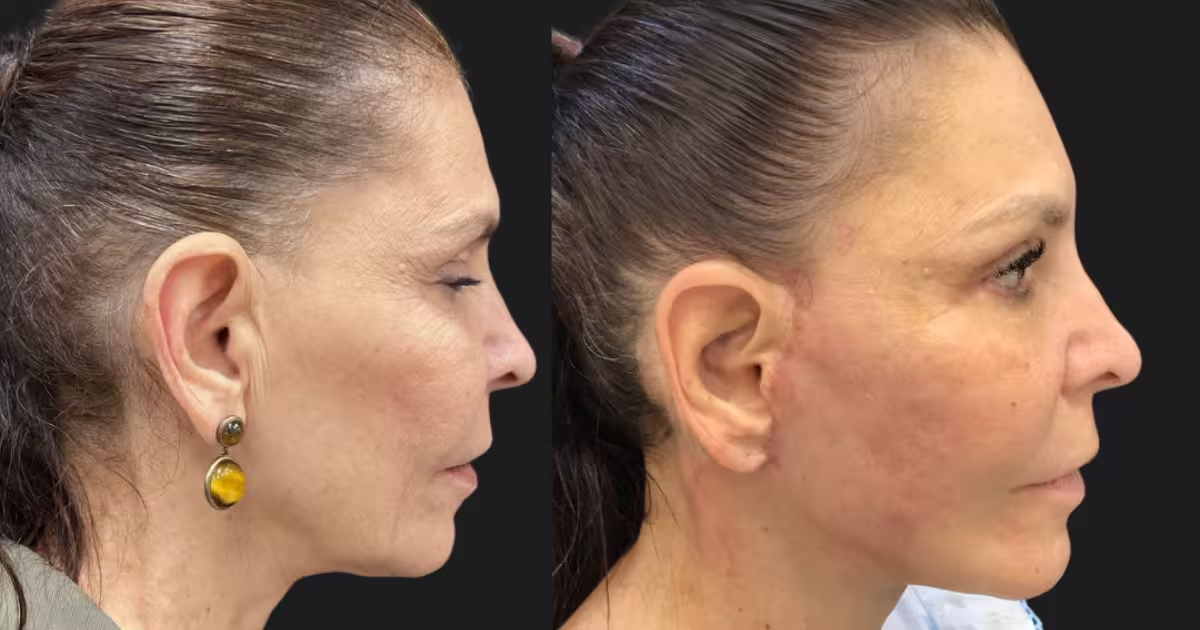
Facial aging happens gradually. Over time, the face may lose definition, the skin may become looser, and contours that were once more defined can begin to change.
Often, people notice these transformations before they can identify exactly what bothers them.
It is common to hear statements such as:
- “My face looks tired.”
- “My skin is sagging.”
- “My jawline has disappeared.”
- “I don’t recognize myself in photographs.”
These perceptions may indicate that it is time to seek a specialized facelift evaluation.
However, it is important to clarify that there is no specific age for having a facelift. The indication depends mainly on the characteristics of the face, the degree of aging, and each patient’s expectations.
A facelift should not be performed simply because someone has reached a certain age. Surgery should be recommended when there is an anatomical change that can be treated safely and appropriately.
What Is a Facelift?
A facelift, also known as facial lifting or rhytidectomy, is a surgical procedure designed to treat facial and neck laxity and changes associated with aging.
The procedure can address different structures depending on the indicated technique.
Its goals may include:
- Redefining facial contours.
- Improving cheek laxity.
- Restoring jawline definition.
- Treating changes in the neck.
- Repositioning tissues that have shifted.
- Promoting rejuvenation without changing the patient’s identity.
Modern facelift planning is not limited to tightening the skin.
The evaluation considers facial anatomy as a whole.

Is There a Right Age to Have a Facelift?
No.
This is one of the main questions people have when they begin researching facial surgery.
Two people of the same age can experience completely different aging processes.
The indication considers factors such as:
- Degree of laxity.
- Skin quality.
- Facial structure.
- Neck changes.
- Loss of jawline definition.
- Characteristics of the deeper tissues.
- Individual expectations.
Therefore, one person may be a candidate for surgery at an age when another person does not yet need it.
The appropriate timing is determined by medical evaluation, not simply by the number of years a person has lived.
What Signs May Indicate That It Is Time to Consider a Facelift?
There are several signs that deserve attention.
They do not automatically mean that surgery is necessary. However, when they appear together and bother the patient, they may justify a specialized consultation.
The main signs include:
- Noticeable facial laxity.
- Loss of jawline definition.
- Drooping cheeks.
- The development of jowls.
- Excess skin on the neck.
- A double chin associated with skin laxity.
- Deeper facial folds.
- A consistently tired appearance.
- Changes that do not respond adequately to less invasive treatments.
The combination of these changes is more important than any single sign in isolation.
Loss of Jawline Definition Can Be an Important Sign
A well-defined jawline contributes significantly to facial contour.
With aging, tissues may shift, and the lower face can lose definition.
Patients may notice that:
- The jawline is less defined.
- The lower face looks heavier.
- Small pockets of tissue have appeared near the jawline.
- The transition between the face and neck has become less defined.
When these changes are related to laxity, a facelift may be one of the treatment options.
The indication depends on an evaluation of the structures involved.
The Cheeks May Begin to Sag
Throughout the aging process, the tissues of the face can change position.
This may create a heavier appearance in the lower face.
Some people notice:
- Drooping cheeks.
- Loss of facial contour.
- More pronounced folds.
- A “sagging” appearance.
In these situations, simply treating the skin’s surface may not be enough.
Modern facelift techniques aim to work at deeper levels and reposition tissues according to each patient’s anatomy.
Jowls Can Also Indicate Facial Laxity
Jowls are areas of sagging that develop near the jawline.
They can make the lower facial contour look less defined.
Patients may notice that:
- The face has lost its firmer appearance.
- The jawline looks less defined.
- Small pockets have appeared alongside the chin.
- The facial contour has become irregular.
When these changes are related to laxity, a facelift may be considered.
Correct diagnosis is important because not every change in the jawline area has the same cause.
The Neck Matters Too
Many people seek treatment for the face but overlook the fact that the neck is part of the overall facial appearance.
With aging, the following changes may occur:
- Excess skin.
- Neck laxity.
- Fat accumulation beneath the chin.
- Loss of definition between the jawline and neck.
- Changes in the muscular structures of the area.
When the face and neck age simultaneously, facelift planning may include treatment of the neck.
The goal is to avoid an obvious difference between a rejuvenated face and a neck that still shows significant signs of aging.
Does a Double Chin Mean You Need a Facelift?
Not necessarily.
A double chin can have different causes.
It may be related to localized fat, skin laxity, anatomical characteristics, or a combination of these factors.
Therefore, it is necessary to identify its underlying cause.
During the evaluation, the physician may assess:
- Amount of fat.
- Skin elasticity.
- Degree of laxity.
- Jawline contour.
- Deep structures of the neck.
For some patients, the solution may involve liposuction. For others, a facelift combined with neck treatment may be more appropriate.
The technique should be a consequence of the diagnosis.
Do Wrinkles Mean It Is Time to Have a Facelift?
Not always.
Superficial wrinkles are primarily related to skin quality and movement.
The main purpose of a facelift is to treat laxity and changes in the tissues of the face and neck.
Therefore, it is important to distinguish between:
- Fine lines.
- Skin laxity.
- Tissue descent.
- Loss of contour.
- Volume changes.
A person may have many wrinkles and not need a facelift.
Another person may have relatively few wrinkles but significant laxity and benefit from surgery.
Can Creams and Non-Surgical Treatments Replace a Facelift?
It depends on the condition being treated.
Skincare and non-surgical procedures can help improve certain aspects of facial aging.
They may address:
- Skin texture.
- Hydration.
- Pigmentation.
- Fine lines.
- Superficial skin quality.
However, when significant laxity and tissue displacement are present, these treatments may not provide the same structural correction as surgery.
This does not mean that a facelift is appropriate for everyone.
It means that each concern needs to be treated with the appropriate strategy.
When May a Facelift Be More Appropriate?
Surgery tends to be considered when significant facial laxity is present and the patient wants a more structural and long-lasting change.
Situations that may lead to an indication include:
- Moderate or significant laxity.
- Drooping cheeks.
- Jowls.
- Loss of jawline definition.
- Neck laxity.
- Combined changes affecting the face and neck.
An individualized evaluation determines whether a facelift is truly appropriate.
Does a Facelift Change the Shape of the Face?
The goal of a modern facelift should not be to transform facial identity.
The purpose is to reposition structures that have changed with aging and restore contours.
Good planning aims to preserve:
- The natural shape of the face.
- Facial expressions.
- Individual characteristics.
- Facial proportions.
- The patient’s identity.
The desired result is a rejuvenated but recognizable face.
This focus on natural-looking results is one of the pillars of modern facial surgery.
Deep Plane Facelift: When Can This Technique Be Considered?
The Deep Plane Facelift is one of the techniques used in modern facial rejuvenation.
It works on deeper facial planes and may be indicated for certain patterns of facial aging.
The technique may be considered when there is:
- Facial laxity.
- Tissue descent.
- Loss of jawline definition.
- Midface changes.
- Aging involving both the face and neck.
However, a Deep Plane Facelift is not automatically the best technique for everyone.
The indication depends on each patient’s anatomy and pattern of aging.
What Happens During a Facelift Consultation?
The consultation is one of the most important stages of treatment.
Dr. José Salim Cury (CRM-SP 150220) evaluates the face as a whole before determining any surgical technique.
During the evaluation, the following are assessed:
- Skin quality.
- Degree of laxity.
- Cheeks.
- Jawline.
- Neck.
- Area beneath the chin.
- Deeper structures.
- Patient expectations.
This analysis makes it possible to understand what is actually causing the aged appearance.
Only then can the physician discuss which strategy may provide the best result.
Natural-Looking Results Should Be a Priority
One of the biggest concerns among people seeking a facelift in São Paulo is avoiding an artificial-looking result.
The goal of modern facial rejuvenation is not to make the patient look like a different person.
It is to restore an appearance that existed before laxity became evident while respecting the natural evolution of the face.
The planning aims to:
- Preserve identity.
- Restore contours.
- Avoid excessive tension on the skin.
- Respect facial proportions.
- Create a harmonious result.
The best result is one that allows you to remain recognizable while looking more rested and rejuvenated.
Can a Facelift Be Combined With Blepharoplasty?
In some patients, yes.
When facial aging also affects the eyelids, blepharoplasty may be indicated together with a facelift as part of a comprehensive facial rejuvenation plan.
This approach may address:
- Facial laxity.
- Changes in the cheeks.
- Jawline contour.
- Neck.
- Excess eyelid skin.
- Fat pockets around the eyes.
The indication depends on medical evaluation and patient safety.
The goal is to create harmony between the different regions of the face.
Follow our Instagram profile.
How Can You Know If You Really Need a Facelift?
The answer is not found in an online test, a photograph, or your age.
The best approach is to undergo an in-person evaluation.
During the consultation, the surgeon can determine:
- Whether there is a surgical indication.
- The degree of facial aging.
- Which structures are involved.
- Which technique may be most appropriate.
- Whether other procedures should be combined.
- Which results are realistically achievable.
This evaluation helps prevent decisions based solely on perceptions or comparisons.
The signs that may indicate the need to consider a facelift are primarily related to facial and neck laxity and loss of definition.
Drooping cheeks, jowls, loss of jawline contour, excess neck skin, and significant changes in facial shape are some of the signs that deserve specialized evaluation.
However, none of these signs alone determines the need for surgery.
A facelift should be recommended according to the patient’s anatomy, degree of aging, health conditions, and individual goals.
More important than knowing when to have a facelift is knowing whether it is truly the right procedure for you.
Schedule Your Facelift Consultation in São Paulo
If you have noticed that your face has lost definition, that your cheeks have become lower, or that the jawline and neck area have changed over time, an individualized evaluation can clarify your options.
Schedule a consultation with Dr. José Salim Cury (CRM-SP 150220) in São Paulo.
The evaluation will help understand your facial aging process and determine precisely whether a facelift is indicated and which strategy may provide natural and harmonious rejuvenation.
Your face has its own identity.
Rejuvenation should preserve that identity, not erase it.