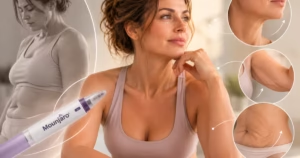

The beginning of a weight-loss journey is often marked by expectations, dietary changes and medical supervision. For people using medications such as Ozempic, Wegovy or Mounjaro, weight reduction can represent a significant transformation in their health and daily routine.
However, there is another stage that does not always receive the same attention: what happens after the body begins to change?
Clothes become looser. Measurements decrease. The face may lose volume, and some areas of the body may develop skin laxity. In certain cases, even after significant weight loss, body contours may not match the results a person had imagined.
This is when new questions arise. How can muscle mass be preserved? Can the skin still retract? Why does the face look different? When should aesthetic treatments or plastic surgery be considered?
These questions are part of a broader discussion about weight loss.
The second stage does not necessarily mean losing more weight. It means understanding how the body is responding to weight loss and what care may be needed from that point onward.
What Are GLP-1 Medications, and How Are They Related to Weight Loss?
Medications such as Ozempic and Wegovy contain semaglutide, while Mounjaro contains tirzepatide, which acts on both GIP and GLP-1 receptors.
These medications affect mechanisms involved in appetite regulation, food intake and blood glucose control. When prescribed for appropriate indications, they can contribute to significant weight reduction.
However, responses to treatment vary from patient to patient.
The amount of weight lost, the rate of change and the resulting body composition depend on several factors, including individual characteristics, diet, physical activity, medical conditions and medical supervision.
For this reason, treatment success should not be assessed solely by the number on the scale.
It is also important to consider metabolic health, muscle preservation, functional capacity and changes in the skin and body contours.
After Weight Loss, the Body Needs to Adapt to a New Reality
When body weight decreases, different structures within the body undergo changes.
The reduction in adipose tissue changes body volume. Muscle mass may be preserved or reduced, depending on factors such as dietary intake, physical activity and individual characteristics. The skin, in turn, must adapt to the reduction in the volume it previously supported.
This adaptation does not always happen completely.
Some people have skin that retracts well. Others continue to have folds and excess tissue, particularly after substantial weight loss.
Age, genetics, a history of weight fluctuations and the length of time the skin remained stretched can all influence this process.
Therefore, there is no single outcome that applies to every patient. Two people can lose the same amount of weight and have very different needs afterward.

The Number on the Scale Has Decreased, but Body Composition Matters Too
One of the most important points in this second stage is understanding that losing weight does not mean losing only fat.
During weight loss, a reduction in lean mass, which includes muscles and other tissues, may also occur. The proportion of this loss varies according to the individual and the conditions under which weight loss takes place.
When muscle mass decreases significantly, patients may notice changes in strength, functional capacity and body contours.
For this reason, nutritional support and appropriate exercise can play an important role in preserving muscle mass.
Protein intake should be consistent with individual needs, especially when reduced appetite makes it difficult to obtain sufficient amounts through food.
Strength training, when indicated and performed with appropriate guidance, may also help preserve or build muscle.
These measures do not automatically eliminate skin laxity. However, they help address important aspects of body composition during and after weight loss.
Why Can Skin Laxity Develop After Weight Loss?
The skin contains structures responsible for support and elasticity, including collagen and elastin fibers.
As we age, these structures undergo natural changes. In addition, prolonged stretching and a substantial reduction in body volume can make tissue retraction more difficult.
The results may be noticeable in different areas.
On the abdomen, the skin may form folds. On the arms and thighs, excess tissue can alter body contours. In the breasts, volume loss may change the shape and position of the tissues.
The face can also undergo significant changes.
It is essential to understand that skin laxity does not mean weight-loss treatment has failed. It may be a consequence of changes in the body, influenced by each person’s individual characteristics.
Furthermore, excess skin, residual fat and volume loss are different conditions. Each requires its own assessment.
What Happens to the Face During the Second Stage of Weight Loss?
The face can change significantly during substantial weight loss.
Reduced volume in the cheeks may make facial contours appear less full. The jawline may become less defined, while laxity in the lower face and neck may become more noticeable.
For some patients, these changes create an appearance that does not match the expectations they had during their weight-loss journey.
A person may be pleased with the reduction in weight but feel that their face looks more tired or has lost some of its previous definition.
However, not every facial change means there is excess skin.
In some situations, volume loss is the main concern. In others, tissue laxity is more prominent, or both changes occur alongside the natural aging process.
This distinction is essential when choosing an appropriate approach.
For example, a treatment focused on skin laxity may not address all concerns when volume loss is also significant.
When Does Plastic Surgery Become Part of the Discussion?
Plastic surgery may be considered when certain changes persist after weight loss and cause aesthetic or functional discomfort.
For the body, procedures such as abdominoplasty, brachioplasty or thigh lift may be evaluated when significant excess skin is present.
For the face, a facelift may be an option for patients who have substantial facial laxity and anatomical characteristics suitable for surgery.
However, the recommendation should not be based solely on the number of pounds lost or the use of GLP-1 medications.
The surgeon needs to assess the patient’s anatomy, tissue quality, weight-loss history, medical condition and goals.
It is also important to determine whether body weight is sufficiently stable and whether the patient is in suitable condition for the procedure.
Plastic surgery is not a mandatory stage of weight loss. It may be part of the treatment plan when a concern can be addressed surgically and the expected benefits justify the risks.
Facelift After Weight Loss: What Needs to Be Evaluated?
A facelift is a surgical procedure designed to address certain signs of aging and facial laxity.
After substantial weight loss, it may be considered when excess skin and changes in tissue position are present, particularly in the lower face and neck.
However, every face has a unique combination of characteristics.
During the assessment, it is important to consider:
- Skin quality and elasticity.
- Jawline definition.
- Cheek volume.
- Skin laxity in the lower face.
- Neck contours.
- The relationship between volume loss and excess skin.
- The patient’s medical condition and expectations.
These factors help determine whether a facelift in São Paulo may be appropriate or whether other approaches could be more suitable.
One available technique is the Deep Plane Facelift, which addresses deeper tissue planes in the face. Its suitability depends on individual anatomy and needs, and it is not automatically the best choice for every patient.
The goal of planning is to understand which structures need to be addressed and what results can realistically be achieved.
Is It Better to Wait Before Having Surgery?
In many cases, it is important to assess whether body weight has reached a more stable phase before planning plastic surgery.
When significant weight loss continues, facial and body contours may change again. This can affect surgical planning and the maintenance of results.
However, there is no universal timeline that determines when every patient will be ready for surgery.
The decision depends on weight changes, ongoing treatment, nutritional status, medical conditions and the procedure being considered.
It is also important to inform both the surgeon and anesthesiologist about the use of medications such as semaglutide and tirzepatide. These substances can delay gastric emptying, requiring an individualized assessment of anesthetic risk and perioperative planning.
Patients should not stop or change their medication on their own. Decisions must be made with the healthcare professionals responsible for their treatment.
The Second Stage Also Involves More Realistic Expectations
During weight loss, it is common to set a target weight. However, as that goal approaches, new expectations may emerge.
A person may imagine that their body will become firmer, that their skin will retract completely or that their face will retain the same volume it had before.
This does not always happen.
The outcome depends on tissue characteristics and the changes caused by the weight-loss process.
For this reason, it is important to understand that body recomposition, aesthetic treatments and plastic surgery have different goals.
Physical activity can help preserve muscle. Nutritional care helps meet the body’s needs. Some nonsurgical treatments may improve certain aspects of the skin. Surgery, in turn, may be considered to remove excess tissue that does not respond sufficiently to other measures.
None of these approaches replaces all the others in every situation.
The most appropriate path depends on what actually needs to be addressed.
What Should You Do When Weight-Loss Results Do Not Match Your Expectations?
The first step is to avoid making hasty decisions.
If weight loss has caused changes that concern you, consider talking to the healthcare professionals overseeing your treatment to understand what is happening.
An assessment can help distinguish between temporary changes, loss of muscle mass, skin laxity, excess skin and reduced facial volume.
Based on this evaluation, it becomes possible to discuss available options, their limitations and the appropriate time to consider each one.
In some cases, the priority may be improving nutrition and preserving muscle. In others, it may make sense to evaluate specific skin treatments or discuss surgery.
Most importantly, the decision should be individualized, with clear information about benefits, risks and expectations.
Follow our Instagram profile.
Weight Loss and Facial Rejuvenation: An Individualized Plan
The second stage of weight loss does not have to be defined by the relentless pursuit of a new aesthetic standard.
It can be an opportunity to better understand your body, identify the changes that genuinely concern you and decide which measures make sense for your health and self-esteem.
When facial laxity develops after significant weight loss, a specialist assessment can help evaluate the relationship between the skin, facial volume and tissue support.
Dr. José Salim Cury (CRM-SP: 150220 | RQE: 82241) works in plastic surgery, with a focus on facial rejuvenation and procedure planning tailored to each patient’s characteristics.
During an evaluation for a facelift in São Paulo, the goal is to understand the changes present, discuss treatment options and clarify the limitations of each approach.
Not everyone who loses weight needs surgery. However, people with significant facial laxity may benefit from an assessment to determine whether surgical treatment is appropriate.
The Next Step After Weight Loss
Using GLP-1 medications can be part of a significant transformation. However, the journey should not be evaluated solely by the amount of weight lost.
Preserving health, understanding changes in body composition and assessing skin quality are also important aspects that deserve attention.
If weight loss has changed your facial contours and you would like to understand your treatment options, a specialist consultation can help answer your questions.
Schedule a consultation with Dr. José Salim Cury (CRM-SP: 150220 | RQE: 82241) in São Paulo for an individualized assessment of facial changes after weight loss and to learn about rejuvenation options that may be appropriate for your situation.
The goal is not to follow a single standard, but to make informed decisions that respect each person’s anatomy, health and expectations.
Schedule your assessment with the team of Dr. José Salim Cury (CRM-SP: 150220 | RQE: 82241).